A Professional's Take on the New Bambu Lab X2D 3D Printer
Introduction
The Bambu Lab X2D arrives in a market that prizes speed, reliability, and multi-material flexibility. For professionals evaluating a printer for rapid prototyping, small-batch production, or serious hobbyist work, the X2D markets itself as a next-step tool that brings dual-extrusion capability into a platform known for high throughput and tight integration between hardware and software. This review examines the X2D from the perspective of real-world workflows: how it performs across common use cases, what buyers typically care about, and where it fits in a shop or studio.
Detailed Product Review and Analysis
Design and Build Quality
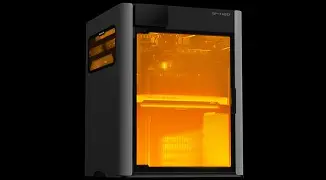
At first glance, the X2D keeps the clean, industrial aesthetic characteristic of Bambu Lab’s product line. The chassis and major structural components aim to balance rigidity with a compact footprint, and the overall assembly appears designed with servicing and accessibility in mind. From a professional point of view, the emphasis is on minimizing user friction: accessible filament paths, quick-release build plates, and modular components all add up to less downtime during production cycles.
Motion System and Speed
Speed is a headline capability for this family of printers. The X2D continues Bambu Lab’s focus on core-XY or similar high-performance motion architectures, which translate to high acceleration and the ability to produce parts faster than many traditional Cartesian machines. In a professional environment the value of faster prints is twofold: reduced prototype turnaround time and improved machine utilization in multi-shift operations. That said, speed must be balanced with quality; the X2D’s tuned motion control and firmware improvements are intended to preserve detail at higher velocities, which is critical for functional prototypes and parts with fine features.
Extrusion: Dual Capability and Material Handling
The defining feature of the X2D is its dual-extrusion capability. Dual extrusion opens up practical workflows that single-extruder machines cannot match: multi-color models, multi-material assemblies, and the use of soluble supports for complex geometries. For professional users, being able to print a single part with a dissolvable support material reduces post-processing labor and improves geometry fidelity for internal cavities and undercuts.
Material handling around dual extrusion is often the practical limiter — reliable filament feeding, cross-contamination avoidance, and straightforward swapping of support material are all important. The X2D is designed with these concerns in mind by offering clear filament routing and, in many installations, compatibility with automated material systems and filament sensors that reduce failed prints caused by runout or jams. Professionals should still budget time to validate dual-extrusion profiles for their specific filament combinations, especially when pairing flexible filaments with rigid ones.
Print Quality and Material Compatibility
Print quality in real-world conditions depends on hardware, software, and process control. The X2D’s nozzle and hotend design, combined with active cooling and tuned thermal management, are engineered to support a wide range of materials — from PLA and PETG for rapid concept models to engineering-grade polymers suitable for functional testing. The ability to use soluble support materials enables better results for complex geometries and assemblies that would otherwise require manual support removal or redesign.
For work that demands dimensional accuracy and repeatability, such as jigs, fixtures, or end-use enclosures, the X2D’s mechanical stability and calibration routines are essential. Professionals who require tight tolerances should still plan to perform job-specific calibration (dimensional tuning, compensation for shrinkage, and material-specific cooling profiles) as part of their implementation process.
Software and Ecosystem
Bambu Lab’s ecosystem — including slicing, remote management, and any accessory material systems — is an important part of the value proposition. Effective slicing profiles for dual-extrusion, easy-to-use presets for soluble supports, and reliable remote monitoring (job queuing, failure detection) are essential for integrating a printer into a busy workflow. The X2D is evaluated not just as hardware, but as a combined hardware-software solution. Teams that already use Bambu Lab’s software tools will find continuity; teams coming from other ecosystems should plan a short onboarding period to adapt profiles and workflows.
Find top-rated Electronics products at great prices.
View Offers →Real-World Performance and Use Cases
To judge a printer professionally, consider typical scenarios where it will be used:
- Rapid prototyping: Designers and engineers benefit from faster iteration cycles. The X2D’s speed and dual-material capability shorten the time from concept to testable part, enabling more iterations within the same time window.
- Small-batch production: For low-volume manufacturing — jigs, custom enclosures, or replacement parts — the X2D provides an economical way to produce durable components without tooling costs. The dual extrusion and ability to switch support materials reduce assembly steps for complex parts.
- Functional testing: Engineers testing fit, form, and function value materials that simulate end-use plastics. The X2D’s material range allows better-functional prototypes and helps identify design issues earlier in the development cycle.
- Education and labs: University labs and advanced maker spaces that require flexible materials and multi-color demonstration parts will find the X2D useful — provided operators have basic maintenance skills and a controlled environment to mitigate warping with engineering-grade filaments.
- Product design visualization: Multi-color or multi-material prints allow product teams to present assemblies and user interfaces in a physically meaningful way, improving stakeholder feedback.
Pros & Cons
- Pros
- Dual-extrusion capability for multi-material and soluble-support workflows
- High-speed motion architecture that improves throughput
- Compact industrial design with user-serviceable components
- Integration with a mature software ecosystem for slicing and remote management
- Suitable for professional use cases: prototyping, small-batch production, and functional testing
- Cons
- Dual-extrusion workflows require additional tuning and increase complexity
- Higher operational cost relative to a single-extruder hobby printer (more consumables, potentially more maintenance)
- Some advanced materials may still require careful environmental control (enclosure, dry filament) to achieve consistent results
- Initial setup and calibration for production-grade repeatability take time and expertise
How the X2D Compares (at a Glance)
The table below offers a qualitative comparison of the X2D against a single-extruder prosumer model and a representative dual-extruder prosumer alternative. This is intended to help buyers place the X2D within common purchasing choices rather than to list exhaustive specifications.
| Characteristic | Bambu Lab X2D | Typical Single-Extruder Prosumer | Typical Dual-Extruder Prosumer Alternative |
|---|---|---|---|
| Primary Use | High-throughput prototyping; complex multi-material parts | Concept models, single-material parts | Multi-color or multi-material hobbyist projects |
| Throughput | High — engineered for speed | Moderate | Moderate to high (depends on motion hardware) |
| Multi-material Support | Native dual-extrusion with workflows for soluble supports | None (single-material) | Dual-extrusion but with varying levels of ecosystem support |
| Operational Complexity | Higher — requires tuning and material management | Lower — simpler to operate and maintain | Higher — similar complexity to X2D, may vary by vendor |
| Software Ecosystem | Integrated slicing, monitoring, and material handling tools | Varying — often relies on third-party slicers | Varying — may lack tightly integrated material systems |
| Best For | Teams requiring speed and multi-material capability in an integrated platform | Hobbyists and newcomers focused on ease-of-use | Advanced hobbyists and smaller teams wanting multi-color parts without industrial features |
Buying Guide: What Professionals Should Consider
When evaluating the X2D or similar printers, professionals should align selection criteria with intended workflows. Below are the main decision points and how they map to typical shop needs.
1. Intended Use and Throughput
Assess whether the printer will be used for one-off prototypes, iterative design loops, or low-volume production. If thr…2. Multi-Material Workflows
Dual extrusion is useful when designs require soluble supports or multiple functional materials. Consider whether those workflows will materially reduce downstream labour (assembly, support removal). If multi-material parts are central to the product, choose a platform with proven support for soluble materials and robust filament handling.
3. Material Range and Environmental Controls
Confirm the printer’s compatibility with the materials needed for testing or end-use parts. Engineering plastics often require an enclosure and dry filament handling; ensure the printer and the workspace can provide this environment. For parts that must resist heat, chemicals, or mechanical loads, validate material performance early with test coupons.
4. Software and Automation
Software determines repeatability and ease of integration. Look for software that offers reliable dual-extrusion profiles, remote job management, and clear logging for troubleshooting. For production environments, automation features (job queuing, multi-spool feeders) reduce operator load and increase uptime.
Find top-rated Electronics products at great prices.
View Offers →5. Total Cost of Ownership
Consider not only the purchase price but also consumables, spare parts, expected maintenance intervals, and operator time. Dual-extrusion increases material costs (two filaments per job, potentially soluble filaments) and can increase maintenance if not managed carefully. Budget for initial tuning time — a new installation often requires iterative setup to reach production-grade reliability.
6. Support, Community, and Documentation
Professional users benefit from vendor support and an active community. Good documentation accelerates onboarding and troubleshooting; responsive support reduces downtime in production. Check for available training materials and whether the vendor offers business-grade service options or access to parts and consumables at scale.
7. Footprint, Noise, and Operational Considerations
Physical space, noise levels, and power requirements matter in shared workspaces. The X2D aims to be compact relative to throughput, but buyers should verify fit and plan for ventilation or enclosures when printing materials that emit fumes. Consider placement for filament storage to reduce moisture exposure and simplify filament swaps.
Common Buyer Questions and Practical Tips
- How hard is it to tune dual-extrusion profiles? Expect a learning curve. Dual-extrusion demands attention to nozzle offsets, purge strategies, and filament temperature compatibility. Start with simple two-color prints before moving to soluble-support jobs.
- Can the X2D run unattended? It is designed for reliable operation with sensors and error handling, but unattended production requires robust process control: dry filament management, scheduled maintenance, and fail-safe monitoring.
- What consumables should be budgeted for? Beyond filament, plan for spare nozzles, belts, bearings, and adhesives for bed adhesion. Soluble support materials can be a significant recurring cost if used frequently.
- How to maximize uptime? Standardize filament storage (dry boxes), create a regular maintenance checklist, and maintain a small inventory of common spare parts to minimize downtime.
Conclusion
The Bambu Lab X2D positions itself as a capable, productivity-focused tool for professionals who need the flexibility of dual extrusion combined with high throughput. Its strengths lie in enabling multi-material and soluble-support workflows while maintaining a compact, serviceable design and an integrated software ecosystem. For design teams, prototyping shops, and small-batch manufacturers that value iteration speed and assembly simplification, the X2D offers meaningful workflow advantages.
At the same time, dual-extrusion and high-speed printing introduce operational complexity. Teams should weigh the trade-offs: higher consumable costs, increased setup and calibration effort, and a need for environmental control when using engineering materials. Buyers who prioritize simplicity, minimal maintenance, or the lowest capital outlay may prefer a single-extruder platform, whereas users who need multi-material capability and better production throughput will find the X2D compelling — provided they invest the time to tune and integrate it into their processes.
Ultimately, the X2D is not simply a faster printer; it is a platform that rewards thoughtful process design. When paired with disciplined material management, routine maintenance, and well-defined print profiles, it can be a significant productivity enhancer for professional additive-manufacturing workflows.