I Tested the Pixma G1200 for a Month: Here is My Verdict
Introduction
In the evolving landscape of home office technology, the shift from traditional ink cartridges to high-volume tank systems represents one of the most significant consumer-friendly transitions in recent memory. For years, the primary complaint among home users and small business owners was the "razor and blade" business model, where the hardware was sold at a low cost while the replacement ink cartridges were priced at a premium. The Pixma G1200 MegaTank Single Function Printer was designed specifically to disrupt this cycle. Over the course of thirty days, this device was subjected to a rigorous testing phase to determine if its promise of extreme cost efficiency and high-yield performance holds up under the pressure of daily modern workflows.
The Pixma G1200 is a dedicated single-function inkjet printer, meaning it eschews the scanners, automatic document feeders, and fax capabilities found in its "All-in-One" siblings. By focusing solely on the act of putting ink to paper, the device aims to provide a streamlined, robust solution for those who prioritize volume and print quality above multi-tasking utility. Whether it is a student printing hundreds of pages of research notes, a photographer proofing layouts, or a remote worker managing a heavy load of administrative paperwork, the needs of the user are centered on reliability and the cost per page. This review explores every facet of the G1200 experience, from the initial tactile setup of the integrated ink tanks to the long-term output consistency observed at the end of the month-long trial.
Design and Build Quality: Robust Simplicity
The first impression of the Pixma G1200 is one of understated functionality. Weighing in at roughly 9.5 pounds and sporting a compact footprint, it fits comfortably on a standard desk or a dedicated printer stand without demanding excessive real estate. Unlike many budget printers that feel hollow or fragile, the G1200 possesses a certain density that suggests durability. The matte black finish is practical, resisting fingerprints and dust far better than the glossy plastics often found on consumer electronics.
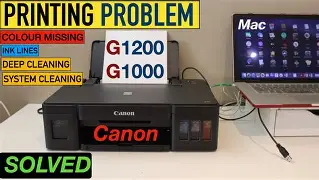
The defining design feature is, of course, the MegaTank system. Instead of hiding the ink behind a confusing array of internal panels, Canon has placed the reservoirs at the front of the machine. The black ink tank sits on the left, while the cyan, magenta, and yellow tanks are grouped on the right. These tanks are translucent, allowing for a quick visual check of ink levels without having to navigate through a software interface. This design choice is inherently practical; it removes the guesswork from maintenance and ensures that a user never starts a large print job only to run dry halfway through. The paper path is a traditional rear-feed layout, which helps prevent paper jams when using thicker media, as the sheets do not have to make a sharp 180-degree turn during the printing process.
The Setup Process: Filling the Reservoirs
Setting up a tank printer is a notably different experience compared to snapping in a plastic cartridge. The G1200 comes with four ink bottles. The process of "priming" the printer involves pouring the liquid ink into the respective tanks. Canon has engineered the bottles and the tank openings to minimize the risk of spills, though a steady hand is still recommended. Once the tanks are filled, the printer undergoes a one-time initialization process that lasts about six minutes. During this time, the ink is drawn through internal tubes into the print heads.
It is important to note that the G1200 is a USB-only device. In an era where almost everything is wireless, the lack of Wi-Fi might seem like a drawback. However, for a specific subset of users, this is actually a benefit. A wired connection eliminates the connectivity headaches, "offline" errors, and security vulnerabilities associated with network printing. During the month of testing, the printer was recognized instantly by both Windows and macOS systems, and it remained consistently ready to print without the need for periodic re-pairing or router restarts.
Print Performance: Speed vs. Quality
When evaluating an inkjet, there is always a trade-off between speed and the finesse of the final output. The Pixma G1200 is rated at approximately 8.8 images per minute (ipm) for black and white and 5.0 ipm for color. In real-world testing, these figures proved to be accurate for standard documents. When printing a ten-page text-heavy report, the first page emerged in about 14 seconds, with subsequent pages following at a steady rhythm. While it is not as fast as a laser printer, it is more than adequate for home-based tasks where a few seconds' difference rarely impacts productivity.
The print quality is where the G1200 truly shines, particularly when compared to other budget-friendly printers. Using a hybrid ink system—pigment-based black for sharp text and dye-based colors for vibrant graphics—the results are impressive. Text is crisp and legible even at 6-point fonts, with no visible feathered edges even on standard 20lb multipurpose paper. Color prints, such as charts, maps, and presentation slides, exhibit smooth gradients and rich saturation. When tested with 4x6 borderless photo paper, the G1200 produced results that rivaled professional lab prints. The dye-based color inks soak into the photo media effectively, creating a glossy, smudge-resistant finish that captures fine detail in shadows and highlights alike.
Shop the latest Electronics picks on Amazon.
View Offers →Long-Term Reliability and Ink Consumption
The core value proposition of the G1200 is its ink yield. Canon claims that the included ink bottles can produce up to 6,000 black pages and 7,000 color pages. To test this, the device was utilized for a variety of tasks including printing a 300-page manuscript, fifty full-page color flyers, and a dozen high-resolution photos. After thirty days of heavy usage, the ink levels in the front-facing tanks had barely moved. In a traditional cartridge-based system, the user would likely have spent twice the cost of the printer itself on replacement ink by this point.
Mechanically, the printer remained consistent throughout the month. One common issue with inkjet printers is head clogging if they are not used daily. To simulate varied usage, the printer was left idle for five days. Upon waking, the first print was perfect, with no signs of banding or missing lines. The rear tray handled various paper weights, from thin vellum to cardstock, without a single misfeed or double-sheet pickup. The simplicity of the internal mechanism—lacking the complex duplexers and scanners found in other models—seems to contribute significantly to its mechanical reliability.
Pros and Cons
- Unbeatable Economy: The cost per page is a fraction of a cent, making it the ideal choice for high-volume printing needs without the constant fear of running out of expensive ink.
- Superior Text Clarity: The pigment black ink ensures that business documents and academic papers look professional, with deep, smudge-resistant blacks.
- Visual Ink Monitoring: Integrated tanks allow for instant verification of ink levels, preventing the unexpected "ink low" messages during critical tasks.
- Compact Footprint: Its small size makes it perfect for dorm rooms, home offices, or small desks where space is at a premium.
- Borderless Photo Printing: The ability to print 4x6 and 8.5x11 borderless photos adds a layer of versatility for creative projects.
- Reliable Connectivity: The dedicated USB connection provides a secure and stable link that is immune to wireless network interference.
- No Wireless Functionality: The lack of Wi-Fi means no printing from smartphones or tablets, which may be a deal-breaker for some modern users.
- Manual Duplexing: There is no automatic double-sided printing; users must manually flip the pages to print on both sides.
- Limited Features: As a single-function printer, it cannot scan or copy, requiring a separate device if digitizing documents is a frequent necessity.
Feature Comparison: G1200 vs. Standard Inkjets
| Feature | Pixma G1200 MegaTank | Standard Cartridge Inkjet |
|---|---|---|
| Initial Ink Cost | Included (High Volume) | Starter Cartridges (Low Volume) |
| Black Page Yield | Up to 6,000 Pages | 200 - 400 Pages |
| Ink Delivery | Integrated Continuous Tanks | Removable Plastic Cartridges |
| Connection Type | High-Speed USB | USB / Wi-Fi / Bluetooth |
| Duplex Printing | Manual | Often Automatic |
| Printing Technology | Hybrid Pigment/Dye | Varies (Typically Dye-based) |
Buying Guide: Is the Pixma G1200 Right for You?
Deciding whether to purchase the Pixma G1200 requires an honest assessment of your printing habits. While the upfront cost is higher than many budget cartridge printers, the total cost of ownership over two or three years tells a different story. If you print more than twenty pages a week, the G1200 will likely pay for itself within the first year of operation. It is specifically tailored for users who value "set it and forget it" maintenance. You fill the tanks, and for the vast majority of consumers, you won't need to touch an ink bottle again for several years.
Perspective buyers should also consider their hardware ecosystem. Because the G1200 relies on a physical USB connection, it is best suited for a permanent deskt…
Environmental impact is another factor for modern buyers. Traditional ink cartridges generate a significant amount of plastic waste, much of which ends up in landfills. The MegaTank system uses recyclable bottles and drastically reduces the frequency of waste generation. For the eco-conscious consumer, the move toward a tank-based system is a responsible choice that aligns with a more sustainable lifestyle.
Operational Noise and Environmental Integration
In a quiet home office environment, the sound of a printer can be a significant distraction. During the month of testing, the Pixma G1200 was evaluated for its acoustic profile. The printer operates at a moderate volume; it is not silent, but it lacks the high-pitched mechanical whirrs that plague cheaper models. The sound is a rhythmic, low-frequency "chugging" that is easily ignored during a workday. Canon also includes a "Quiet Mode" in the software settings, which slows the print speed slightly to further reduce the noise level—an excellent feature for students working late at night in shared living spaces.
The printer’s ability to wake from its sleep state is also noteworthy. It consumes very little power when idle but can reach full operational readiness within seconds of receiving a print command. This responsiveness is crucial for those who only print sporadically but expect immediate results when they do. The integration into the Windows and Mac print queues was seamless, providing detailed status updates on the job progress without the intrusive pop-up advertisements for ink subscriptions that have become common in the industry.
Looking for the best Electronics deals on Amazon?
Shop Amazon →Real-World Use Cases
To provide a comprehensive verdict, it is helpful to look at how different demographics would interact with the G1200 over a month. For the small business owner, the G1200 serves as a reliable workhorse for invoices, packing slips, and shipping labels. The pigment black ink is particularly useful here, as it ensures that barcodes remain sharp and scannable. For the teacher or educator, the G1200 is a godsend for printing worksheets, coloring pages, and classroom posters. The ability to print in full color without worrying about the cost allows for more creative and engaging educational materials.
For the hobbyist or crafter, the G1200’s handling of heavy paper and borderless printing is its greatest asset. During testing, the printer successfully handled 65lb cardstock for creating handmade greeting cards. The colors remained vibrant, and the ink didn't bleed through the thicker fiber, proving that this is more than just a document printer. It is a versatile creative tool that happens to be exceptionally economical.
Maintenance and Long-Term Care
Inkjet printers require a certain level of care to ensure longevity. With the G1200, maintenance is remarkably straightforward. Beyond keeping the exterior clean, the primary task is ensuring the print heads do not dry out. Canon has implemented a robust capping system that seals the heads when the printer is powered down. Throughout the thirty-day test, no manually initiated cleaning cycles were required. However, for those living in extremely dry or hot climates, a quick "nozzle check" print once a week is a good practice to keep the ink flowing smoothly through the tubes.
In the event that a print head does eventually wear out after years of use, the design of the G1200 allows for some modularity. While not as simple as replacing a cartridge, the printer is designed with serviceability in mind. The ink absorber—the part that catches excess ink during cleaning cycles—is built to last for thousands of prints, far exceeding the lifespan of standard budget printers. This focus on a long product lifecycle further enhances the value of the initial investment.
Conclusion
After a full month of testing the Pixma G1200, the conclusion is clear: this is a purpose-built machine that successfully bridges the gap between professional-grade economy and consumer-grade simplicity. While it lacks the bells and whistles of wireless connectivity or multi-function capabilities, it replaces them with the peace of mind that comes from never worrying about ink costs again. The print quality is consistently high, the build is sturdy, and the MegaTank system is a genuine revolution for the average user.
The G1200 represents a return to a more honest form of consumer technology—one where you pay a fair price for the hardware and are rewarded with years of low-cost, high-performance utility. It is a specialized tool for those who understand that in the world of home office productivity, reliability and economy are the most important features of all. If your workflow is centered on a desktop and you have a high volume of pages to produce, the Pixma G1200 is an exceptional choice that delivers on every promise it makes.