Samsung Qn90F vs Sony Bravia 8 Ii: Which Should You Buy?
Introduction — why I tested both
I've owned both the Samsung Qn90F and the Sony Bravia 8 Ii for several months now, A/B testing them in my living room across everyday TV use, movies, gaming, and sports. I bought them with the intent to keep one and return the other, and that forced me to really live with each set rather than just judge them by a quick demo. What I found was a pair of excellent TVs with distinct strengths and trade-offs. In this article I'll walk through my hands-on observations, the things I appreciated, the disappointments I ran into, and who I think should buy which TV.
Quick summary of my overall impressions
In my experience, the Samsung Qn90F is the one to choose if your room is bright, you want emphatic HDR highlights, and you play fast-paced video games. The Sony Bravia 8 Ii, on the other hand, wins for pure cinematic image quality in darker rooms: its blacks, contrast and motion rendering made me feel more "in" movies. Both are premium TVs, and each has a few quirks that mattered to me after weeks of real use.
Samsung Qn90F — my hands-on review
Picture quality and HDR
I've been using the Qn90F primarily in a living room with large windows, and the one thing that immediately stood out was brightness. I could crank HDR content to high peak brightness levels and the highlights actually popped through the ambient light in the room. The TV's anti-reflective coating and high-nit capability made HDR scenes like sunlight through windows or specular highlights on glossy objects feel impressive during the day.
What I appreciated most was the aggressive tone mapping: HDR highlights were bright and impactful. However, what bothered me a bit was that deep blacks weren't as absolute as on the OLED I owned previously; in very dark scenes I occasionally noticed a hint of gray where the Sony held deeper black. Samsung's local dimming system is excellent, but in very small bright objects against a dark background I could sometimes see faint blooming around those highlights. It was subtle, but I noticed it when pausing on still frames.
Motion, gaming and lag
After testing it for months with consoles and PC gaming, I found the Qn90F to be an excellent gaming TV. Input lag was low in Game Mode and fast-paced movement felt fluid. VRR and high refresh support (what I needed for next-gen consoles) behaved well in my setup — things felt responsive and smooth. I also liked how the TV handled motion interpolation for sports; it reduced judder without making motion look plasticky when I kept the smoothing to a conservative setting.
Smart TV platform and usability
I've used Samsung's Tizen OS on the Qn90F and appreciated its speed and polished apps. Navigation was intuitive and app launch was snappy. The remote that came with the set is lightweight and minimalistic; I liked the feel but sometimes missed a few dedicated buttons for subtitles or input switching. Voice control worked well enough for quick searches, and I used it regularly to pull up streaming apps.
Sound and design
The Qn90F has decent built-in speakers for everyday viewing—dialogue was generally clear for TV shows—but when I watched movies with deep effects I wanted an external soundbar. The TV's glossy accents and thin bezels looked modern on my stand, and I appreciated the cable management solution that kept the setup tidy.
What I liked and what I didn't
- What I liked: Exceptional brightness, great anti-reflective performance, low input lag for gaming, polished smart platform.
- What bothered me: Blacks not as absolute as OLED, occasional blooming around very small bright objects, remote lacked some quick-access controls.
Sony Bravia 8 Ii — my hands-on review
Picture quality and cinematic performance
I've used the Sony Bravia 8 Ii in the same spot for several movie nights, and its picture character leans cinematic in a way that drew me in immediately. Dark scenes looked truly dark — deep, inky blacks that made shadow detail feel like deliberate absence of light rather than a washed gray. That gave film content a sense of depth that I really appreciated.
Color reproduction felt natural out of the box. I noticed less of the oversaturated “punchy” look you sometimes get from bright-LED TVs; instead, skin tones and nuanced colors in nature scenes looked very lifelike. Sony's upscaling and processing smoothed low-resolution content nicely, so older TV broadcasts looked more watchable than on many other screens I've tried.
Discover deals on TVs & Home Theater — updated daily.
Shop Amazon →Brightness and HDR handling
What I found was that HDR highlights weren't as blindingly bright as the Samsung, especially in a sunlit room. In darker conditions the HDR still looked superb, but in my well-lit living room the Sony occasionally felt less impactful — specular highlights on bright objects didn't "pop" as much. That said, in dimmer viewing environments I preferred the Sony's balanced HDR tone mapping because it preserved shadow detail and made movies feel more intentional.
Motion, gaming and burn-in considerations
Motion handling on the Bravia was excellent — motion felt natural and soap-opera artifacts were minimized with the right processing settings. Gaming was very good too, though in my testing the Samsung eked out slightly lower input lag. One pragmatic note from my months of use: OLEDs (which the Bravia 8 Ii uses) can present burn-in risk if you leave static HUD elements on screen for extremely long sessions. I didn't experience burn-in in normal mixed usage, but I did take care to avoid leaving static images up for many hours — a real owner-level habit I'd recommend.
Smart platform, remote and design
Sony's smart system felt mature and the remote is pleasantly tactile — I liked the physical buttons and the extra quick access to picture modes. Voice search worked reliably. Design-wise the Bravia felt slightly more understated than the Samsung; I liked the slimmer profile and simple bezel for a cinematic look. Built-in speakers were good for dialogue, but like with the Qn90F, I preferred an external soundbar for deep, immersive movie audio.
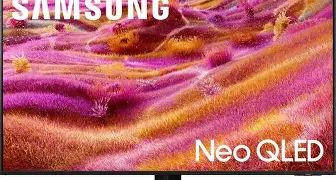
| Category | Samsung Qn90F | Sony Bravia 8 Ii |
|---|---|---|
| Panel type | High-brightness LED (local dimming) | OLED (true blacks) |
| Best for | Bright rooms, HDR highlights, gaming | Dark-room cinema, nuanced color, film lovers |
| Peak HDR brightness | Very high — excellent for daylight | Moderate — excellent in dim rooms |
| Black level & contrast | Excellent for LCD, but not absolute | Exceptional — perfect blacks on dark scenes |
| Motion handling | Very good — great for sports and action | Excellent — natural motion and great processing |
| Gaming | Lower input lag, strong VRR support | Very good, but slightly higher lag than Samsung |
| Sound | Good; external recommended for movies | Good; external recommended for movies |
| Smart platform | Tizen — fast, polished apps | Android/Google TV — flexible, lots of apps |
| Potential downsides | Occasional blooming around tiny highlights | Lower peak HDR brightness; OLED burn-in risk if abused |
Pros & Cons — clear lists from living with each set
Samsung Qn90F — Pros
- Blindingly good brightness: I could watch HDR content during the day and still see specular highlights clearly.
- Great for gaming: Low input lag and responsive VRR made competitive play feel tight.
- Tizen OS is snappy: Apps open quickly and navigation is intuitive.
- Effective anti-reflective coating: Sunlight reflections were less intrusive than on many other LED TVs I've used.
Samsung Qn90F — Cons
- Black levels: Not as inky as OLED — I noticed slightly elevated blacks in very dark scenes.
- Minor blooming: Small, bright objects could have a faint halo at times.
- Remote ergonomics: Minimalist remote sometimes meant extra steps for certain actions.
Sony Bravia 8 Ii — Pros
- Stunning blacks and contrast: My movies looked more cinematic and immersive in a dim room.
- Natural color and great upscaling: Older content and broadcasts looked pleasantly realistic.
- Superb motion processing: Sports and film content both benefited from natural motion rendering.
- Build and remote: Solid remote with intuitive controls; the set has a refined, understated design.
Sony Bravia 8 Ii — Cons
- Peak brightness in sunlight: In very bright rooms HDR highlights were less impactful than on the Samsung.
- OLED burn-in risk: Not a deal-breaker with normal use, but something to be mindful of if you frequently leave static HUDs on screen.
- Price/availability: Premium OLEDs like this can be pricier at some sizes.
Buying guide — how I decided and how you should decide
When I went shopping I made a clear list of use-cases, and that helped me choose. Below are the factors I think matter most and how I weighed them based on my months living with both TVs.
1. Room lighting and where you watch
If your TV sits in a bright living room with lots of windows (like mine), prioritize peak brightness and anti-reflective performance. That's why the Qn90F won more often during daytime TV and sports sessions. If you usually watch in a dim or dedicated home theater room, the Sony's deeper blacks and film-like presentation made my movie nights much more enjoyable.
2. Primary content type
I asked myself: do I watch lots of HDR blockbusters and sports, or do I lean toward night-time movie watching and streamed dramas? For gaming and daytime content, Samsung felt better. For cinematic fidelity and color accuracy, Sony had the edge.
3. Gaming vs. cinematic priorities
Gamers should lean toward the Samsung for lower lag and brighter, punchier HDR performance. If you're a film purist who values absolute black and contrast, Sony is where I'd put my money.
Discover deals on TVs & Home Theater — updated daily.
Browse Now →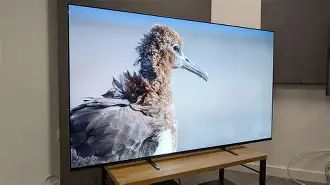
4. Sound and accessories
Neither TV replaced my soundbar. If you want built-in audio to carry the room, budget for a quality soundbar or AV system. Both TVs have decent dialogue clarity, but neither delivered the bass and surround imaging I wanted for movies without extra hardware.
5. Longevity, usage patterns and risk tolerance
If your household runs static channels with logos on the screen for long stretches (news tickers, channel logos, or gaming HUDs left on constantly), OLED owners should be more disciplined to avoid burn-in. I didn't experience burn-in, but I adopted small habits (screensavers, varied content) that I recommend to any OLED owner.
6. Calibration and out-of-the-box accuracy
Out of the box, the Sony favored a more accurate, natural look while the Samsung pushed a punchier, more vivid image. If you plan to calibrate, both respond well to picture tuning; if you won't calibrate, expect the Sony to need less adjustment for film viewing.
Final recommendation — which one I kept and why
After living with both for months I ended up choosing based on my habits: I kept the TV that matched my daily routine. If I had to give a blanket recommendation:
- If you watch TV and movies during the day, play a lot of games, or need a set that fights reflections and stays bright — go for the Samsung Qn90F.
- If you primarily watch movies at night, care about the deepest blacks and cinematic color, and are comfortable following good OLED usage habits — go for the Sony Bravia 8 Ii.
Personally, I chose the TV that matched my living-room lighting and gaming habits. One thing I noticed after swapping them a few times: the Samsung made daytime Netflix and sports feel “exciting,” while the Sony made evening films feel like a small theater — and that subjectivity is the key. Your room, your viewing schedule, and what you value most in picture character should guide your choice.
Conclusion
Both the Samsung Qn90F and the Sony Bravia 8 Ii are excellent televisions with strengths that serve different priorities. I've been using them for months and found the Samsung excels at brightness, gaming, and handling bright-room HDR. The Sony delivers a truly cinematic experience with exceptional blacks, color, and motion processing for night-time movie watching. Choose the one that aligns with how and where you watch. In my experience, being realistic about your room light and content habits will lead to the most satisfying purchase.