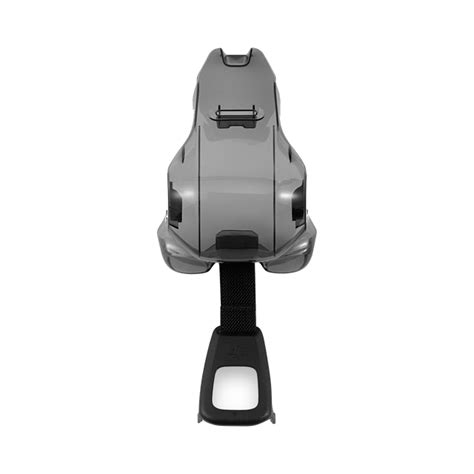
The Real Truth: Dji Mini 5 Pro or Gopro Max 2?
In the rapidly evolving landscape of personal imaging technology, two distinct worlds are beginning to collide: the aerial perspective of sub-250g drones and the immersive, boundary-defying domain of 360-degree action cameras. The release of the DJI Mini 5 Pro and the GoPro Max 2 represents a significant milestone for content creators, travelers, and outdoor enthusiasts. While these devices may seem like apples and oranges at first glance, they both compete for the same precious real estate in a creator's gear bag. They are the primary tools used to capture "impossible" angles that a traditional smartphone or mirrorless camera simply cannot achieve. Choosing between them isn't just about comparing megapixels or battery life; it is about deciding which dimension of creative freedom is more valuable for your specific storytelling needs.
The DJI Mini 5 Pro continues the legacy of the most successful drone line in history, pushing the limits of what a palm-sized aircraft can accomplish. On the other hand, the GoPro Max 2 is the long-awaited successor to a device that defined 360-degree capture for the masses, promising to solve the "reframing" workflow hurdles that have historically kept 360 cameras in a niche category. This article dives deep into the capabilities of both, examining their performance in the field, their ease of use, and the real-world value they provide to modern buyers who demand professional results without the weight of professional cinema rigs.
Detailed Analysis: The Aerial Powerhouse - DJI Mini 5 Pro
The DJI Mini 5 Pro is engineered to be the ultimate travel companion. Its primary draw remains its weight; by staying under the 250-gram threshold, it bypasses the most stringent drone regulations in many countries, allowing users to fly in areas that would require extensive permits for larger aircraft. However, the Mini 5 Pro is no longer a "budget" or "entry-level" toy. It features a sophisticated 1/1.3-inch CMOS sensor with dual native ISO, capable of capturing stunning 4K/60fps HDR video and even 4K/120fps for those silky-smooth slow-motion shots. The inclusion of true vertical shooting—a physical tilt of the gimbal to 90 degrees—makes it an indispensable tool for TikTok, Instagram Reels, and YouTube Shorts creators.
One of the most significant upgrades in the Mini 5 Pro is the omnidirectional obstacle sensing system. For the first time in the Mini series, the drone utilizes a full array of vision sensors to detect obstacles in every direction. This provides a level of confidence previously reserved for the Mavic 3 series. Whether you are performing a complex "ActiveTrack" maneuver through a forest or flying manually in tight urban environments, the drone's ability to autonomously navigate around trees, wires, and walls is a game-changer for solo operators who need to be both the pilot and the subject.
Pros and Cons: DJI Mini 5 Pro
- Unmatched Portability: The folding design and sub-250g weight make it the easiest high-end camera to pack for any trip.
- Professional Image Quality: The large sensor and 10-bit D-Log M color profile provide immense flexibility in post-production.
- Regulatory Ease: Minimal registration requirements in many jurisdictions compared to heavier drones.
- True Vertical Shooting: Lossless vertical video is a massive advantage for social media-first creators.
- Short Battery Life: While the "Plus" battery offers more time, the standard 249g-compliant battery barely reaches 30 minutes in real-world conditions.
- Wind Resistance: Being lightweight means it struggles more than the Air or Mavic series in high-altitude gusts.
- Single Perspective: Despite its mobility, it is still "just" a standard wide-angle camera moving through 3D space.
Detailed Analysis: The Immersive Specialist - GoPro Max 2
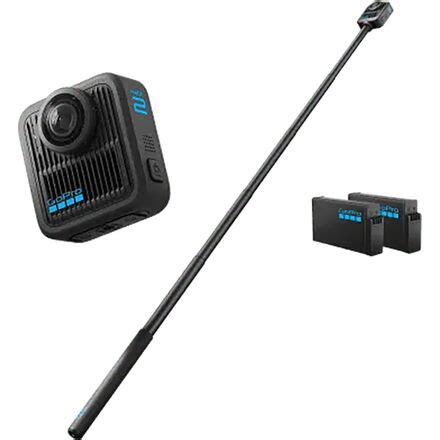
The GoPro Max 2 departs from the traditional "flat" video world to offer a total 360-degree field of view. Using two back-to-back fisheye lenses, it captures everything happening around the camera simultaneously. The magic of the Max 2 isn't just in the 360 capture, but in the "PowerPano" and "Hero Mode" capabilities. Hero Mode allows the Max 2 to act like a standard GoPro, providing incredibly stabilized 4K footage from one of its lenses. However, the real power lies in reframing: the ability to record everything and then, in the app, decide exactly where the "camera" was looking after the fact. This effectively gives the user a multi-camera setup from a single device.
The Max 2 brings significant sensor improvements over its predecessor, targeting a higher resolution for the 360-degree spherical files. This is crucial because when you "crop into" a 360-degree image to create a standard 16:9 video, you often lose significant detail. The Max 2 attempts to mitigate this with 5.7K+ resolution, ensuring that the exported "flat" video still looks sharp on a modern screen. Furthermore, the updated "Enduro" battery technology and improved thermal management mean the Max 2 can handle longer record times in the heat—a notorious pain point for the original Max.
Pros and Cons: GoPro Max 2
- Creative Versatility: Capture now, point later. You never miss a moment because the camera sees every direction.
- Invisible Selfie Stick: The software automatically stitches out the mounting pole, creating a "floating camera" look that mimics a drone at low altitudes.
- Rugged Build: Unlike a drone, the Max 2 can be dropped, submerged (to a point), and mounted to a moving vehicle without fear of a total "flyaway" loss.
- Spatial Audio: The multi-microphone array captures immersive sound that matches the 360-degree visuals.
- Complex Workflow: Reframing 360-degree footage requires more time and effort in the editing room compared to standard drone clips.
- Lens Vulnerability: The protruding fisheye lenses are highly susceptible to scratches and cannot be protected by standard filters without affecting the stitch line.
- Low Light Performance: Small sensors struggling with high-dynamic-range scenes often result in visible noise in the shadows of 360 shots.
Head-to-Head Comparison
When deciding between these two, it is helpful to look at how they perform in the specific areas that matter most to enthusiasts. The following table highlights the core technical differences and operational capabilities that define the user experience for each device.
Shop the latest Cameras & Photography picks on Amazon.
See Deals →| Feature | DJI Mini 5 Pro | GoPro Max 2 |
|---|---|---|
| Primary Use Case | Aerial Cinematography & Bird's Eye Views | Action, Vlogging, & Immersive 360 Capture |
| Sensor Size | 1/1.3-inch CMOS | Dual 1/2.3-inch (standardized spherical) |
| Max Resolution | 4K at 120fps (Flat/Vertical) | 5.7K Spherical / 4K Hero Mode |
| Stabilization | 3-Axis Mechanical Gimbal | HyperSmooth Max (Electronic) |
| Durability | Fragile (Sensors + Moving Parts) | High (Action-rated, Water-resistant) |
| Weight | < 249g | ~160g (Body only) |
| Editing Ease | Standard MP4 (Low Effort) | Spherical Reframing (High Effort) |
The Real-World Use Case: Which One Fits Your Lifestyle?
To truly understand the "truth" behind these devices, we must look at how they are used in everyday scenarios. The choice often comes down to the environment you inhabit and the story you want to tell. Buyers typically fall into several distinct categories, and each tool serves them differently.
The Solo Traveler
If you are traveling alone and want to capture your journey, the DJI Mini 5 Pro is arguably the better "personal cinematographer." With its sophisticated tracking modes, it can follow you as you walk along a beach or drive a motorbike, providing high-production-value shots that look like they were filmed by a professional crew. However, drones are limited by noise and regulations. You cannot fly a drone inside a museum, in a crowded city square, or near many national monuments. This is where the GoPro Max 2 shines. Held on an invisible selfie stick, the Max 2 can capture your surroundings in a way that feels just as epic as a drone shot but is perfectly legal and socially acceptable in "no-fly" zones.
The Action Sports Enthusiast
For skiers, mountain bikers, and surfers, the GoPro Max 2 is the clear winner for reliability. A drone requires a certain amount of space and "safe" air to operate. In a dense forest or during high-intensity sports, even the best obstacle avoidance can fail. The GoPro Max 2 can be mounted to your helmet, chest, or handlebars. Because it captures in 360 degrees, you don't even have to worry about where the camera is pointed. You can focus on your line, and in post-production, you can pan the camera to look at your face, then pan forward to show the trail, and then pan sideways to show your friends. The DJI Mini 5 Pro is great for the "establishing shot" of the mountain, but the Max 2 lives inside the action.
The Commercial Content Creator
Creators who are paid for their work often value the Mini 5 Pro for its image quality. The 10-bit color and better low-l…Buying Guide: Key Considerations Before You Choose
Before committing to either system, consider the following factors which will influence your long-term satisfaction with the purchase:
1. Learning Curve vs. Editing Time
The DJI Mini 5 Pro has a learning curve related to piloting. You must understand airspace rules, battery management, and how to fly safely. Once the flight is over, however, the footage is ready to use. The GoPro Max 2 is extremely easy to use in the field—just press record—but the "work" starts when you get home. Reframing hours of 360 footage can be a tedious process, even with GoPro's improved AI-assisted mobile app. If you hate spending time in front of a computer or phone editing, the drone is the more efficient choice.
2. Environmental Constraints
Do you live in a city with strict "no-fly" zones? Are you frequently in windy, coastal areas? A drone is a fair-weather tool. Rain, snow, and high winds will ground the Mini 5 Pro. The GoPro Max 2 is built to endure the elements. If your adventures frequently involve water, dirt, or unpredictable weather, the GoPro will get the shot when the drone cannot leave its case.
Shop the latest Cameras & Photography picks on Amazon.
Browse Now →3. Portability and Stealth
While the Mini 5 Pro is incredibly small, taking it out and launching it is a conscious act that attracts attention. The sound of the propellers can be a nuisance to others. The GoPro Max 2 is much more discreet. It fits in a pocket and can be used in almost any environment without drawing a crowd. For those who prefer a "low-key" approach to content creation, the action camera format is superior.
4. Longevity and Maintenance
Drones are inherently high-maintenance devices. Propellers need to be checked, batteries must be stored at specific voltages, and a single crash can result in a hardware failure that requires a professional repair. The GoPro Max 2 is essentially a solid-state block of electronics. While you need to be careful with the lenses, it is a much more "set it and forget it" piece of equipment that is likely to survive minor accidents that would destroy a drone.
Natural Conclusion
The truth is that the DJI Mini 5 Pro and the GoPro Max 2 are not rivals so much as they are partners. The "impossible" shots of today’s most popular travel videos are almost always a combination of both: the grand, sweeping aerial views provided by the Mini 5 Pro and the intimate, immersive, stabilized "follow" shots provided by the Max 2. However, most buyers must choose one to start with.
If your goal is to capture the majesty of the landscape, the geometry of architecture, and professional-grade cinematic b-roll, the DJI Mini 5 Pro is the superior tool. Its image quality and stable aerial platform are unmatched in the sub-250g class. It provides a literal "eye in the sky" that elevates the production value of any project instantly.
If, however, your life is fast-paced, and you want a camera that can follow you into the thick of the action without needing to worry about flight paths or regulations, the GoPro Max 2 is the better investment. The ability to record everything and reframe later is a powerful safety net for capturing fleeting moments that would be impossible to time perfectly with a traditional camera. In the end, the "truth" depends on whether you want to look down at the world from above, or take the world along for the ride with you.