Why Everyone is Buying the Ninja Flexflame Grill (Full Review)
Introduction — my experience so far
I've been using the Ninja Flexflame Grill for about six months now, and it quickly became the appliance I reach for when I want a fast weeknight dinner or a weekend cookout without the faff of charcoal and the fuss of a full outdoor grill. I bought it because I wanted something that could sear a steak properly, make a decent burger, and also handle delicate things like fish and vegetables without turning them into charcoal. What I found was a surprisingly versatile countertop grill that delivers on most of those promises — with a few realistic caveats.
Unboxing and first impressions
Right out of the box I noticed that the Flexflame Grill is heavier and more solid than the cheap electric contact grills I've owned in the past. The build feels intentional: thicker grates, a robust hinge, and a well-shaped drip tray. Assembly was simple — it took me under 10 minutes to remove the packaging, slide in the grates, and plug it in. I appreciated that the non-stick-coated parts are reversible and removable, which made the first cleanup less daunting.
Design and build quality
In my experience, the Flexflame's design is a nice balance between countertop appliance and serious grill. The lid locks down tightly for press-style cooking but also opens wide for full-surface grilling. The control panel is uncomplicated — a single temperature dial with helpful marked zones and a small digital readout for the timer. I liked that the power cord length is reasonable; it reaches my kitchen outlet without awkward extension cables.
What I appreciated most about the build was the grate material. They feel like cast or heavy-duty aluminum with a textured non-stick finish that helps with those appetizing sear marks. One thing that bothered me initially was that the exterior finish gets warm to the touch after long sessions; it wasn’t dangerously hot, but I moved it off the edge of my counter to be safe.
Performance — searing, grilling, and temperature control
Performance is where the Flexflame shines for me. Its so-called "flex flame" capability (the ability to rapidly switch between intense searing heat and gentler grilling) made a real difference. I seared ribeye steaks several times and achieved a crust that I would normally only expect from a cast-iron pan on a gas hob. The high-heat setting produces a robust Maillard reaction quickly, locking in juices.
What I found was that the heat distribution is generally even across the grates, though you can still find a slightly hotter zone near the back edge. For thicker cuts I used a two-stage approach: sear on high, then move to medium/indirect heat to finish. Burgers cooked quickly and tasted noticeably juicier than when I used my old electric contact grill.
For delicate foods like salmon, asparagus, or halloumi, the lower heat settings and the ability to lower the lid gently were useful. The fish stayed moist and didn't stick (most of the time). I did notice that if the grill isn't preheated properly, fish and some vegetables can stick — preheating matters here, as it does with all grills.
Discover deals on Electronics — updated daily.
Shop Amazon →Smoke and ventilation
One realistic surprise: the Flexflame produces more smoke than I expected indoors. It's not dangerous, but fatty cuts and marinades will send a noticeable plume up and set off a sensitive kitchen hood. In my experience, using leaner cuts or trimming excess fat reduces smoke, and keeping my range hood on medium-high helped a lot. If you live in a small apartment with no good ventilation, plan to use it in short bursts or near a window.
Cleaning and maintenance
Cleaning was a mixed bag. I liked that the grates and drip tray are removable and dishwasher-safe in theory; in practice, heavily caramelized bits sometimes needed a soak and a soft brush before the dishwasher. The non-stick finish made surface-level cleaning easy — a paper towel wipe between uses usually sufficed. The grease tray is reasonably sized and slides out smoothly, but it can be awkward to clean if you've let oil bake on for a week.
After months of use, I did notice some discoloration on the grate edges and some faint pitting on the non-stick surface where I used a metal spatula by accident…
Accessories and extras
The Flexflame package I bought included a press plate insert and a flat griddle plate in addition to the ridged grill grate. I used the flat griddle occasionally for pancakes and quesadillas; it's handy, but I mainly kept the ridged grate in place because that's what I bought the unit for. I appreciated the included little scraper tool that helps with stuck-on debris. There was no proprietary app or Wi‑Fi connection on my model — it's straightforward and appliance-like, which I prefer for something I use daily.
Real-world cooking notes and recipes I used
Here are some things I actually cooked and what I learned:
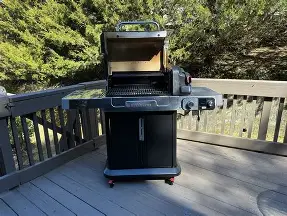
- Ribeye steak: 2–3 minutes per side on high for a medium-rare crust, then 3–4 minutes indirect at medium. Rest for 10 minutes. Result: restaurant-grade sear, juicy interior.
- Burgers: 4–5 minutes per side on high. The burgers didn't flatten as much as in a cast iron pan and had a better crust than my old appliance.
- Salmon fillets: medium heat, lid closed gently, skin-side down to start. Use a fish spatula. Result: crispy skin, moist flesh.
- Vegetables: toss in a little oil and salt, high heat quick sear. Some pieces charred faster — cut sizes consistently for even cooking.
- Pancakes on the flat griddle: quick and even; the non-stick surface made flipping easy.
Pros & Cons
- Pros:
- Excellent searing ability — cuts you wouldn't expect from an electric countertop grill get a good crust.
- Versatility — reversible plates and griddle insert make it useful for many recipes.
- Solid build — feels durable and stable on the counter.
- Easy to operate — simple controls and a short heat-up time.
- Removable, dishwasher-safe pieces for mostly straightforward cleanup.
- Cons:
- Produces noticeable smoke with fatty meats; needs good kitchen ventilation.
- Exterior gets warm during long cooking sessions — keep away from edges and flammable items.
- Non-stick surface can show wear if you use metal utensils or don't clean promptly.
- Drip tray can be awkward to clean if oil is left to bake on.
- Not cheap — better value than many pro grills, but an investment compared to small contact grills.
Comparison: Ninja Flexflame Grill vs Other Common Options
Below is a quick comparison table that I found helpful when deciding whether to keep the Flexflame or stick with other options I considered (a conventional gas grill and a basic electric contact grill).
Shop the latest Electronics picks on Amazon.
View Offers →| Feature | Ninja Flexflame Grill | Conventional Gas Grill | Basic Electric Contact Grill |
|---|---|---|---|
| Portability | High — countertop friendly | Low — heavy, outdoor only | High — lightweight |
| Searing capability | Very good for an electric unit | Excellent — highest heat | Moderate — often weaker sear |
| Smoke output (indoor use) | Moderate to high with fatty foods | High (outdoors, not an issue) | Low to moderate |
| Versatility (plates/inserts) | High — reversible and griddle inserts | Moderate — cook surface only unless accessories | Low — fixed plates |
| Ease of cleaning | Good — removable parts, but watch for buildup | Varies — can be messy and time-consuming | Easy — small plates, usually non-stick |
| Price (relative) | Mid to high for countertop grills | High (initial cost + fuel) | Low |
Who is this grill best for?
In my experience, the Flexflame is best for people who want the flavor and texture advantages of a high-heat sear but need the convenience of an indoor, countertop appliance. If you live in an apartment without outdoor space, entertain occasionally, or want one appliance that can handle steaks, vegetables, and even breakfast on the weekend, this unit is worth considering.
If you barbecue large quantities of food for a crowd, a full-sized outdoor grill still makes more sense. Likewise, if you want a totally hands-free, low-smoke indoor solution for very light cooking, a basic electric contact grill or air fryer might be simpler and cheaper.
Buying guide — what to look for
When shopping for the Ninja Flexflame Grill or a similar high-end countertop grill, here are the practical things I paid attention to and that I recommend you consider:
- Build and weight: Heft tends to correlate with stability and even heat distribution. Lighter grills may be less durable.
- Plate options: Look for reversible or interchangeable plates (grill + flat). This increases versatility.
- Heat settings and controls: A clear dial and a visible temperature guide made my cooking consistent. Digital timers are a plus.
- Removability and dishwasher safety: Removable grates and trays simplified my cleaning routine. Check manufacturer guidance for dishwasher safety.
- Smoke management: Read user feedback about smoke levels if you plan to use it indoors frequently. Make sure your kitchen has decent ventilation.
- Warranty and customer support: A solid warranty provides peace of mind; I checked the manufacturer's warranty before buying.
- Size and capacity: Consider how many portions you typically cook — the cooking surface area matters if you plan to do multiple steaks at once.
- Accessories: Extras like a press plate, scraper, or spatula add value and convenience.
Tips based on what I learned
- Preheat for at least 5–8 minutes on high for the best sear. I learned this the hard way after a few stuck-on fish incidents.
- Trim excess fat on steaks to reduce indoor smoke and flare-up-like splatter.
- Use silicone or wooden tools to protect the non-stick surface.
- Wipe out the drip tray after every heavy use to avoid baked-on grease; this saves time later.
- Let thick cuts rest after searing — a tip I always follow regardless of the appliance.
Final thoughts and conclusion
After six months of regular use, I can honestly say the Ninja Flexflame Grill has become my go-to appliance whenever I want a genuinely good sear and quick cleanup. I was surprised by how close the results get to a gas or cast-iron sear, and I appreciated the flexibility of the removable plates for switching between burgers, steaks, and breakfast foods. The most honest disappointments I experienced were the smoke output with fatty cuts and the gradual wear on the non-stick finish when I treated it like an indestructible tool. Those are manageable issues, though: trim fat, ventilate, and use the right utensils, and you'll extend the life of the appliance.
In short, if you're looking for a countertop grill that feels like an upgrade from the cheap electric contact grills, and you value searing power and multi-functionality, the Flexflame is an option I kept coming back to in my kitchen. It’s not perfect, but for how I cook and the results I want, it strikes a very satisfying balance between performance and practicality.